
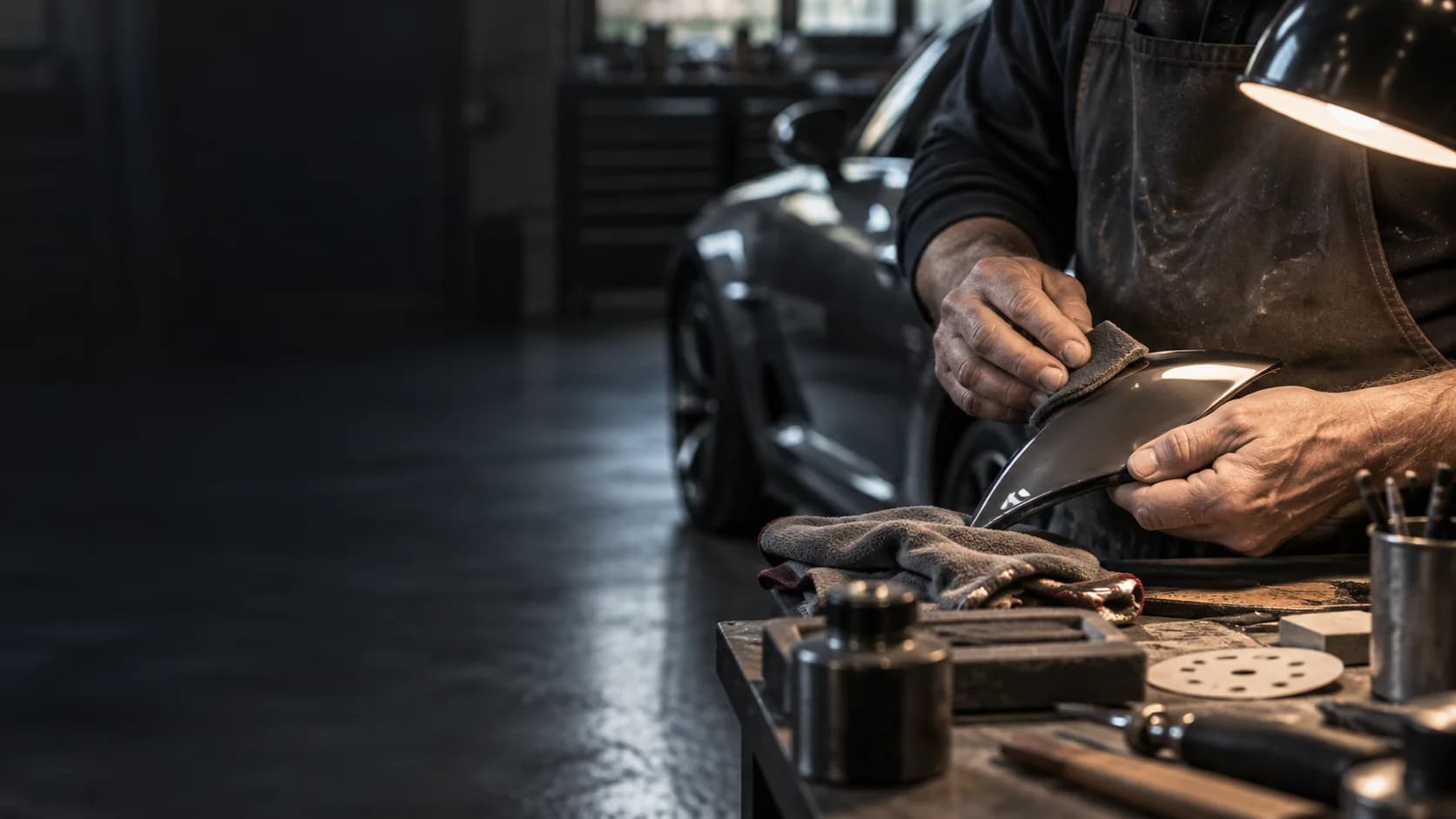
How Robert Crenshaw started repairing bumpers
Robert started repairing bumpers about 30 years ago with a company called Flying Colors. He learned the work by doing it, day after day, on the damage people actually bring in: scraped corners, cracked covers, chipped paint.
Bumpers became the focus early, for a simple reason. They’re the part of a car that gets hit most, and they’re the damage people care about most.
“Bumpers are number one to get damaged. Most people are more concerned about a bumper than they are a scratch.”
Starting a mobile bumper repair business
About 25 years ago, Robert started his own business. It was built around dealerships: he was mobile for them, setting up on their lots on a weekly basis. Working on site meant he could handle more cars, and dealers didn't have to send each one to a shop with high overhead.
Going mobile turned out to be better for everyday car owners, too. Instead of dropping a car at a body shop for days, people could have the repair done at home.
“Going mobile was more convenient for the customer.”
Painting sensor bumpers for a Volvo dealership
For 15 years, Robert has painted parking-sensor bumpers for a Volvo dealership, and he has never had one come back. The same dealership asks him to go around customers' cars and hide blemishes before lease inspections. It's steady, detailed work, and it's where a lot of his care with sensors and color comes from.
“I've been painting sensors at Volvo for 15 years. I've never had one come back saying it was too thick.”
Referrals from detail and mechanic shops
Detail shops and mechanic shops refer their customers to Robert when they see cosmetic damage they don't handle. Customers are often surprised at how quickly he responds, and at how he walks them through the process before he starts.
“Most customers are surprised at how quick I respond and how prompt I am at doing everything, and talking with them, explaining them the process.”
How Robert’s mobile repair works
Robert works from a truck and trailer and does the repair in your driveway. He mixes paint on site from an AkzoNobel refinish system and matches it to your car, welds cracked plastic with rods made for that plastic, and cures the paint with a heat lamp so you can drive within a few hours. Most repairs take under three hours.
He quotes from photos, usually within minutes on a weekday, and quotes rarely change. He doesn't take a deposit. You pay when the job is done: cash, check, or venmo. He's fully insured, including garage keepers coverage.
When Robert says a body shop is the better call
Not every bumper should be repaired. If a bumper has a big rip or chunks missing, it needs replacing, and Robert will say so and point you to a body shop. Key scratches that run down a whole panel need a booth, not a driveway. Metal dents, hail, structural damage, and mechanical problems aren't his work either.
And if a scratch catches your fingernail, he'll tell you up front that it probably won't buff out, and that he'll hide it instead. That's the kind of answer you get before he ever picks up a tool. See the full list of services or read when a body shop makes more sense.